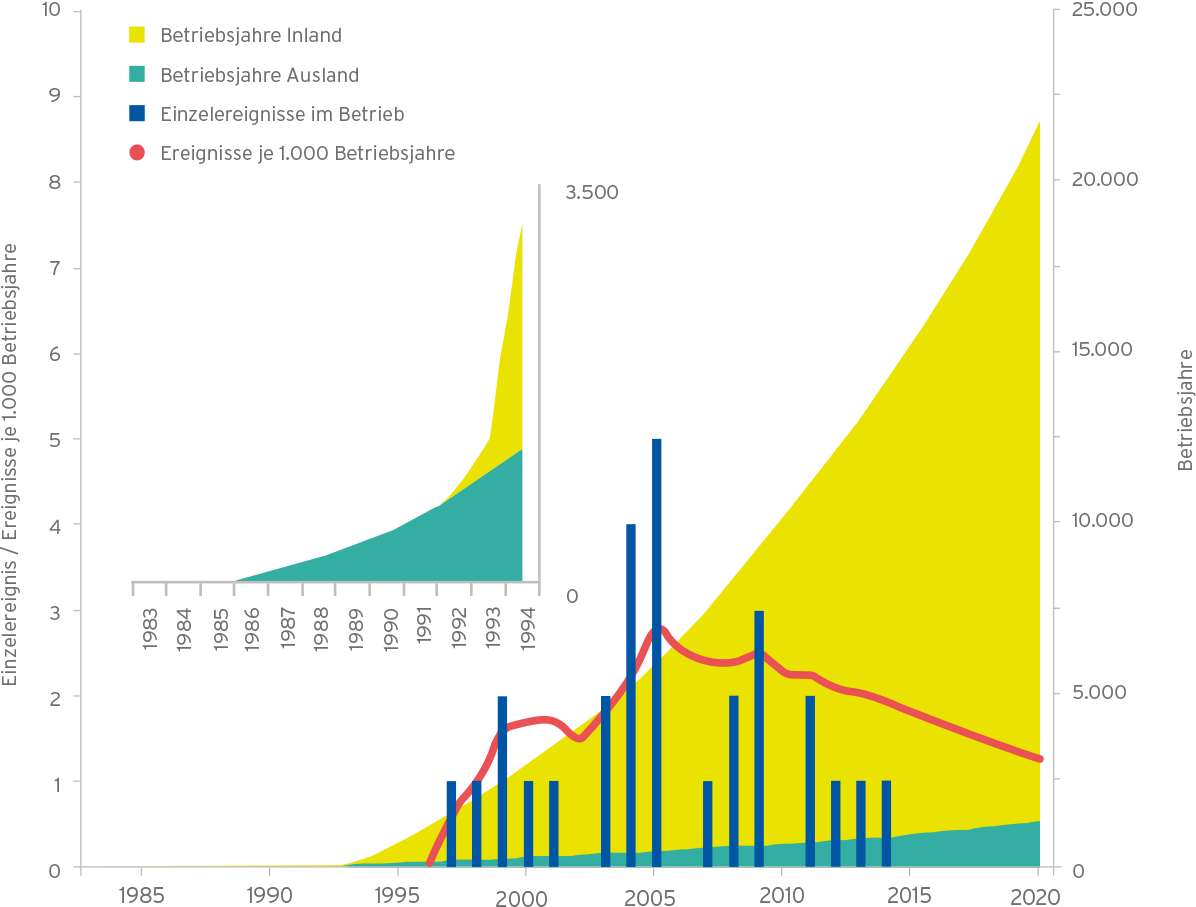
Figure 10 shows that pressure switch events do not correlate with the total number of operating years. It can therefore be assumed that events occur randomly, and it cannot be deduced from their distribution over time that a systematic increase in failures is associated with extended interim storage. The decrease in the frequency of failures is also related to incorporation of the lessons learned during operation or during failure evaluation into the handling of the pressure switches.
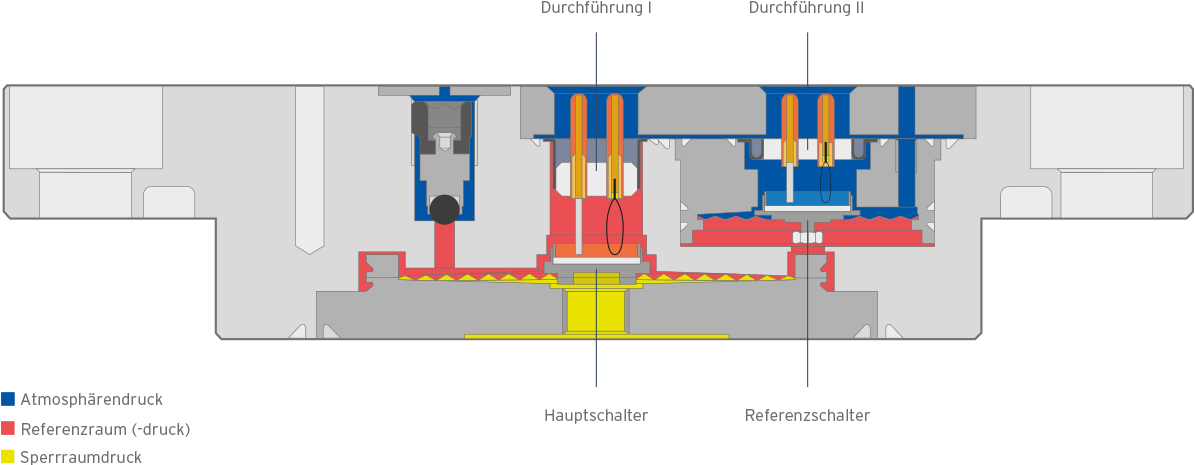
Specific evaluations of pressure switch events show that the vast majority of events were due to leakage at the feedthroughs of the contact pins. This resulted in a pressure drop in the reference chamber but not in a failure of the containment function of the lid system. However, BGZ is working with GNS to optimise the pressure switch for interim storage purposes. Preliminary studies by the manufacturer HBM and GNS show that using glass feedthroughs instead of the ceramic feedthroughs previously used is a promising solution to the problem, as glass feedthroughs do not require additional soldering material.
The DPOPT research programme will subject the new contact feedthrough design to several tests covering operating conditions. The contact pins will be subjected to different mechanical stresses, which are considered to be the cause of the previous defects. These include pure weight loads and the simulation of repeated plugging and unplugging. The new switch will also be subjected to thermal loads to demonstrate that the glass feedthroughs are suitable for the entire temperature range envisaged. Load tests will be followed by helium leak tests in which the specified maximum leak rate must not be exceeded. After successful completion of the internal qualification, a qualification of the glass feedthrough is planned at BAM in order to be able to use the optimised design in the future production of pressure switches.